Behind the UK’s blue plaque obsession — and do they boost your house price?

By Carol Lewis.

Black Brick: Blue Plaques Make for Good History — But Don’t Move the Needle on Price

When it comes to the question of whether historic blue plaques add meaningful value to London properties, Black Brick’s Camilla Dell offers a clear-eyed verdict: for serious buyers at the top end of the market, they rarely feature in the decision at all, according to reporting in The Times.

Dell drew on direct experience to make the point. “The most recent blue plaque property we bought for clients was in Hampstead — an off-market deal of almost £20 million,” she told The Times. “I can honestly say that the blue plaque did not feature at all in the decision-making process for my clients. They were far more interested in the house, the condition, and the fact that it was grade I listed — a feature they wanted and valued.”

It is a characteristically grounded perspective from an agency whose clients are focused on the fundamentals: location, quality, condition and value. At the level at which Black Brick operates, the presence of a plaque — however distinguished the former resident — is unlikely to move a sophisticated buyer’s calculus in either direction.

The article, which explores the history and application process behind the UK’s 19,000-plus historic plaques, acknowledges that there can be exceptions — particularly where a property has a strong cultural association and the right buyer happens to share that passion. But as Dell’s example illustrates, for high-value prime London transactions, the substance of the property itself will always take precedence over its historical theatre.

As featured in The Times

Read the full article here.

Nick Candy sells Chelsea mansion for more than £265 million

By Melissa York.

Black Brick Comments on UK’s Most Expensive Ever Property Sale

Nick Candy’s Chelsea mansion, Providence House, has sold for more than £265 million — believed to be the most expensive residential property transaction ever recorded in the UK, and potentially the world, according to reporting in The Times.

The two-acre estate, which boasts the largest private garden in central London and panoramic views of the River Thames, was never publicly listed. The sale was orchestrated by the private office of UK Sotheby’s International Realty, though the buyer’s identity remains unknown.

The deal comfortably surpasses the previous UK record of £210 million, set in 2020, and dwarfs the biggest London sale of 2025 — The Holme in Regent’s Park, which achieved £139 million.

Camilla Dell, Managing Director of Black Brick, offered her perspective to The Times, contextualising the deal within the broader market: “These sorts of deals are one-offs and almost irrelevant to what the rest of the market is doing. The buyer who can afford this is just not impacted by wars or interest rates. It will be a multibillionaire for whom £265 million, plus stamp duty, plus the continuing costs of keeping a house like that, is a drop in the ocean.”

The sale comes despite a challenging backdrop for prime central London property, where prices fell an average of 7.8% last year, partly attributed to changes to non-dom tax status and higher stamp duty on high-value homes.

Please click here to read the full article and read managing partner, Camilla Dell’s, commentary.

Britons flee Dubai ‘nightmare’ for £5,000 a week luxury UK rentals

By David Byers.

Agents say there has been a 15 per cent rise in inquiries from the UAE since the Iran war led to drone attacks and warnings over free speech

Wealthy British expatriates based in Dubai are contacting luxury London property agents in growing numbers, seeking urgent rental arrangements as regional instability and restrictions on freedom of speech prompt a reassessment of life in the UAE, according to reporting in The Times.

Agents across the prime London market report a notable surge in enquiries from UK nationals who relocated to Dubai — drawn by its tax advantages and perceived safety — but who are now looking to return home, some on an emergency basis, seeking luxury short-term rentals at upwards of £5,000 per week in areas such as Kensington, Chelsea and Notting Hill.

Camilla Dell, Managing Partner at Black Brick, offered a frank assessment of the shift in sentiment. She noted that warnings from UAE authorities — reminding residents that sharing unofficial content about the conflict, including footage of drone strikes, could result in prosecution — had proven a wake-up call for many. “People look at the UAE with real rose-tinted glasses and it takes something like this just to bring it all back into perspective,” Dell told The Times. “This is a country which is geographically located in a very, very volatile region, and there is no freedom of speech.”

The potential return of even a fraction of the estimated 240,000 British expats living in the UAE could provide a meaningful boost to London’s prime property market, which has faced headwinds in recent years from the abolition of non-dom tax status and elevated stamp duty rates. Sold property prices in London’s £4.5 million-plus market declined 4.8% last year, according to Savills.

By contrast, Dubai’s super-prime market had surged — with Knight Frank data showing sales of homes at $10 million or above rising 351% since 2021. The current instability may now be prompting a reversal of that trend.

For the full article, please click here.

Musk ally buys £57m London penthouse in UK’s biggest deal since 2024

By David Byers.

Igor Babuschkin, the co-creator of Elon Musk’s xAI, has purchased the largest penthouse in Park Modern, a £530 million development overlooking Hyde Park

The co-founder of Elon Musk’s artificial intelligence company xAI has purchased a £57 million penthouse overlooking Hyde Park, in the most significant prime London property transaction since 2024, according to reporting in The Times.

Igor Babuschkin paid £10.7 million in stamp duty to acquire the 6,800 sq ft apartment at the Park Modern development in Bayswater, which features a 2,500 sq ft wraparound terrace — the largest in London — with views across Hyde Park and towards Kensington Palace. The property was purchased at shell and core, with Babuschkin understood to have commissioned the developer to design the interior.

Camilla Dell, Managing Director of Black Brick, gave a candid assessment of the deal to The Times. While noting that she has never been an unconditional advocate of the development’s location on a busy road — and would personally favour Mayfair or Marylebone at this price point — she acknowledged the property’s clear appeal to a certain buyer profile. “It’s a secure lock-up-and-leave, with a fantastic view over the park,” she said. “And for an ultra-high-net-worth individual, owning a penthouse is the ultimate trophy asset — sometimes ultra-high-net-worth individuals can be just really obsessive about only wanting to own a penthouse. It’s a penthouse or nothing.”

Dell also offered a broader read on current market sentiment, noting an improving mood since the Autumn Budget, while cautioning that political uncertainty could yet weigh on confidence. “I do feel like there’s a little bit of a mood change,” she said, adding that continued political turbulence could prove damaging — particularly if it brought to power figures less favourable to wealth and taxation than the current administration.

The sale comes against a difficult recent backdrop for London’s luxury property market, where prices for prime homes worth £4.5 million or more fell 4.8% in 2025, according to Savills, amid the abolition of non-dom status and elevated stamp duty rates.

To learn more, read the article here.

Why have so many £1m-plus rural homes lost their value post-Covid?

By David Byers.

The pandemic triggered a boom in seven-figure countryside properties — but tens of thousands have since lost that status. Plus, find out how your area has fared.

The pandemic-era rush to rural Britain has gone sharply into reverse, with countryside property values falling significantly while London and its suburbs regain their appeal — a trend Black Brick’s experts saw coming, according to reporting in The Times.

Research by Savills reveals that the number of homes valued at £1 million or more across Britain fell from 736,668 to 673,143 between 2022 and 2025 — a decline of 9%. Rural and coastal areas have been hardest hit: in the southwest, 42% of homes that crossed the £1 million threshold during Covid have since fallen back below it, while similar reversals have been seen across East Anglia, the southeast and Wales.

Tom Kain, buying agent at Black Brick, said the correction came as little surprise. He described the experience of a client who sold his London home during the pandemic to relocate to a remote corner of Devon — only to be called back to the office shortly afterwards. “Why didn’t you just see how Covid went for another year?” Kain observed.

The retreat from the countryside has been driven by a combination of factors: employers requiring staff to return to the office, higher mortgage rates, increased council tax surcharges on second homes — now applied by 71% of English councils — and tax changes affecting holiday lets introduced in last autumn’s Budget.

Camilla Dell, Managing Director of Black Brick, reflected on how pre-Budget uncertainty weighed heavily on prime London buyers during the second half of last year. “It was not helpful,” she told The Times. “My wealthiest client — we had everything teed up, ready to go, and he pressed pause. He said, let’s just wait for the budget. So he did press pause on that. But then the budget happened and we exchanged.”

While prime central London has faced its own headwinds — including the abolition of non-dom status and stamp duty increases — the data suggests a gradual rebalancing is underway, with demand returning to well-connected suburbs such as Richmond, Islington, Beaconsfield and the Hertfordshire commuter belt, where seven-figure sales are once again on the rise.

To learn more, read the article here.

‘My home is no mansion’: the suburb left on the brink by new tax

Affected residents of London and the wider UK have been asked to share their thoughts on the new £2 million mansion tax.

Announced by Chancellor Rachel Reeves in the Budget last week, the tax is set to add a surcharge of £2,500 to £7,500 a year in council tax bills for owners of properties valued at more than £2 million.

Black Brick Managing Partner Camilla Dell shared her insights in a feature for The Times written by Martina Lees, discussing how buying agents like us are adapting to the tax news and supporting clients for future purchases.

Read the article here.

Is Rachel Reeves really destroying the housing market?

By David Byers.

Whilst we anxiously await the Autumn Budget announcement, the property market stands still.

Months of policy speculation ahead of the Autumn Budget is causing significant disruption to the UK housing market — particularly at the top end — with buyers and sellers alike choosing to pause rather than proceed, according to reporting in The Times.

Camilla Dell, Managing Partner at Black Brick, did not mince her words on the scale of the problem. “I don’t think I’ve ever seen so much kite-flying in a run-up to an autumn statement in my entire career,” she said — a sentiment echoed by agents across the prime and super-prime market.

The uncertainty is being felt most acutely in affluent London postcodes. Data from PropCast shows just eight in every 100 homes under offer in Mayfair and Marylebone (W1), and eleven in Paddington and Bayswater (W2) — figures that reflect both the abolition of non-dom status and the chilling effect of unresolved tax speculation. Sellers, meanwhile, are facing a dual bind: those with significant capital gains fear a CGT expansion covering primary residences above £1.5 million, while landlords are digesting reports that national insurance may be applied to rental income.

The result is a market caught in a holding pattern. Some owners are rushing to sell ahead of a potential Budget hit; others are pausing entirely until the picture clears. Meanwhile, buying chains are being disrupted as would-be downsizers sit tight rather than risk an unaffordable tax bill.

The prime central London market was already under pressure before the latest wave of speculation, with stamp duty increases, the end of non-dom status, and persistently high mortgage rates all weighing on activity. Nationally, Nationwide data shows average house prices fell 0.1% in the period, the fourth monthly decline in six months.

Read it here.

Property market freezes as tax rises spook buyers

By David Byers and Emanuele Midolo.

Featuring in The Times this week with David Byers and Emanuele Midolo, Black Brick Managing Partner, Camilla Dell shares her thoughts on Rachel Reeves’s upcoming budget and its potential impacts on the UK property market.

Black Brick Managing Partner Camilla Dell’s assessment of the pre-Budget property market — that she had never witnessed such levels of policy speculation in her entire career — was cited across multiple Times reports as agents and analysts united in their concern about the damage being done to transaction activity.

Supporting data from PropCast underlines the severity of the freeze: just 8% of homes in Mayfair and Marylebone (W1) were under offer by late July, while affluent areas including Kensington and Chelsea (SW10) saw only 12% of listings move — roughly half the rate recorded in 2022. Nationally, the number of “hot” property markets fell from 2,156 during the Covid boom to 1,678, while “cold” markets more than quadrupled from 88 to 571 over the same period.

Read the full article here.

Best coastal towns to live in the UK 2025

By Tim Palmer.

Popular with avid swimmers, sailors and outdoor adventurists, our many coastal towns are a staple of our culture as an island nation here in the UK.

Black Brick Featured in The Sunday Times Best Places to Live by the Sea

Black Brick’s regional expertise has been recognised in The Sunday Times’ authoritative guide to the best seaside towns to live in across the UK, with the agency’s buying agents contributing local insight on some of the country’s most desirable coastal locations.

Rupert Stephenson, Regional Director at Black Brick, highlighted the understated appeal of Beer in Devon — one of twenty locations featured in the guide. “It’s pretty and unspoilt and there’s a great lifestyle, but unlike Lyme Regis or Sidmouth, which get really busy, nobody really knows it’s here,” he said — a characteristically candid assessment from an agent with deep knowledge of the southwest market.

The guide arrives at a moment of genuine opportunity for coastal buyers. Prime coastal property prices currently sit around 12.8% below their autumn 2022 peak, according to Savills — though that correction follows a 25% surge during the pandemic mini-boom, meaning well-chosen properties still represent significant value. Increased council tax and stamp duty surcharges on second homes have contributed to the price softening, and agents across the board note that vendors who need to sell are pricing accordingly.

Black Brick’s national buying agent network spans prime coastal and rural markets across England, Scotland and Wales, offering clients the same rigorous search and acquisition expertise in the country and at the coast as in prime central London.

Read the article here.

First-time buyers today are going straight for the family house

By Hugh Graham

Black Brick: The Property Ladder Is Disappearing — and It’s Stamp Duty’s Fault

First-time buyers across Britain are increasingly skipping starter properties altogether and going straight for family homes — a fundamental shift in how people approach the property market that Camilla Dell, founder of Black Brick, has been tracking closely, according to reporting in The Times.

The numbers tell a clear story. Some 73% of first-time buyers in Britain purchased a house in 2025, up from 62% in 2020, according to Hamptons estate agency. In London, the proportion has risen from 37% to 50% over the same period. The average age of a first-time buyer has hit a record high of 33.1, according to UK Finance data.

Dell explained the structural shift in straightforward terms. “In the old days, you might buy your studio, then sell it, then buy your one-bed, then sell, then a two or three-bed, then a family house,” she told The Times. “That pattern, certainly in London, has vanished as a result of extortionately high stamp duty rates. People are moving less and trying to future-proof. First-time buyers want a house that will last them a good ten years.”

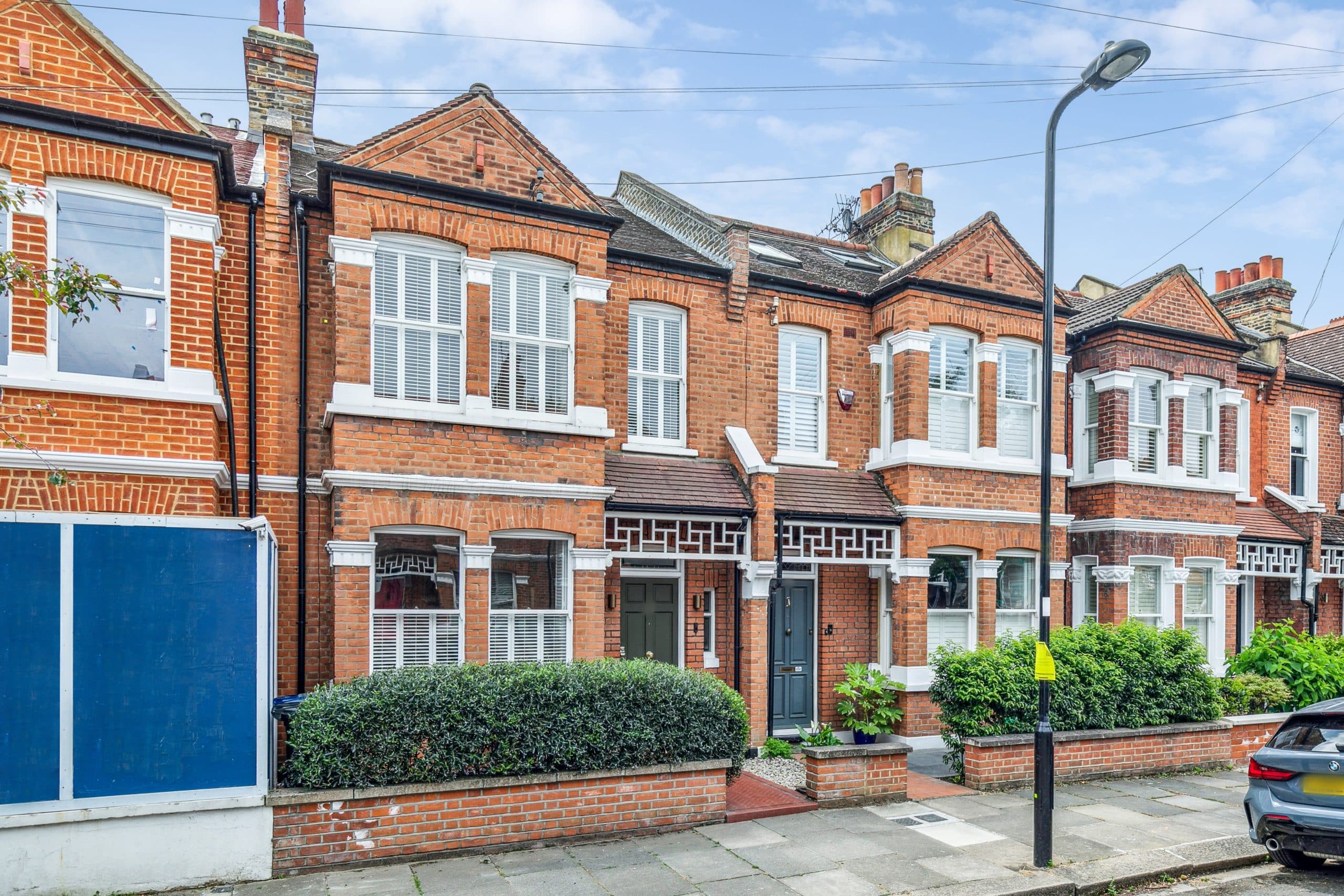
The consequences for different parts of the market are significant, and Dell was direct about what this means for values. “There will be a potential oversupply of studio, one-bedroom and two-bedroom flats as they become less popular — and increasing demand for three to four-bedroom terraced houses, starter homes in outer prime London areas.” She highlighted healthy competition for £1 million houses in family neighbourhoods including Fulham, West Hampstead, Clapham and Balham.

The data reinforces her view: in London, average flat prices have grown just 2% over five years, compared with 12% for terraced houses. Nationally, flats are up 16% against 31% for terraced houses over the same period.

Dell reserved her sharpest criticism for stamp duty itself, which she sees as deeply damaging to overall market health. “Overall, volumes are massively down since George Osborne started messing around with stamp duty. That’s why it’s such a terrible tax. The housing market contributes a significant amount to GDP — and yet stamp duty stops the market from being fluid, as it causes people to stay in the same place longer than they should.”

As featured in The Times

Read the full article by Hugh Graham here.